The Day Electoral College Stopped Working Politics General Knowledge
— 6 min read

The Electoral College’s most dramatic failure occurred in the 2000 election, when it awarded the presidency to George W. Bush despite Al Gore winning the popular vote by roughly 540,000 votes. That clash between the state-based elector count and the national popular tally sparked a wave of reform proposals that still echo in classrooms today.
Politics General Knowledge: Why the Electoral College Matters
Understanding the Electoral College is essential because it translates each state’s preferences into a bundle of electors who ultimately choose the President. In my experience teaching civics, students often assume the popular vote decides the outcome, only to be surprised when the state-level math overrides a national lead. The system was built as a compromise, giving smaller states a voice that balances the influence of densely populated regions.
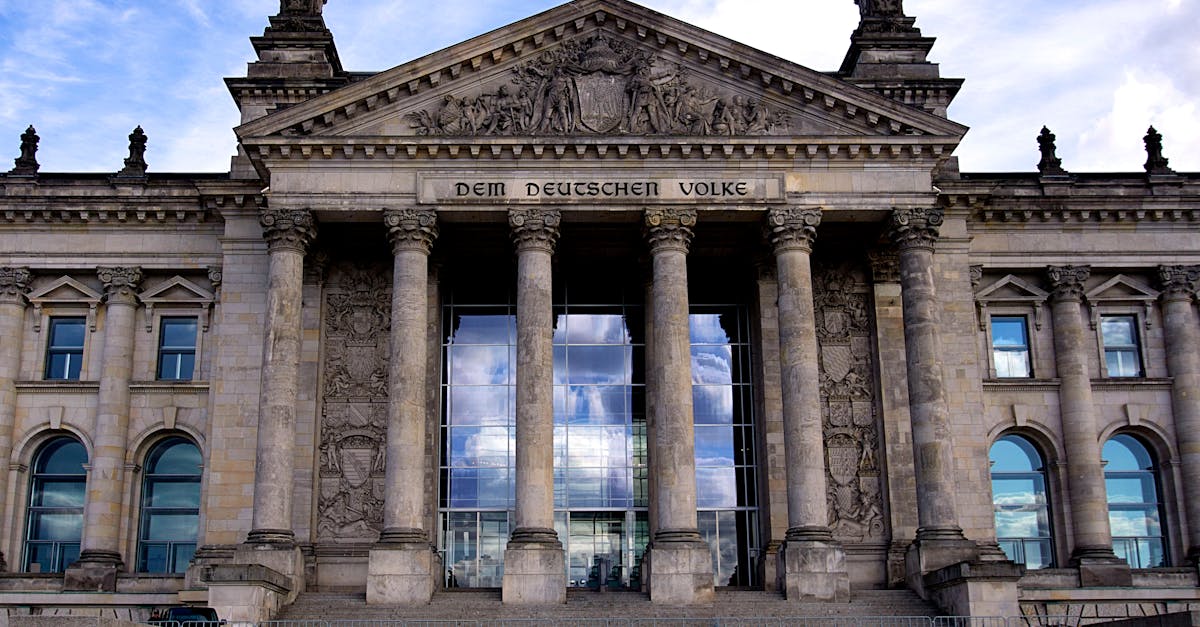
When I first explained the mechanics to a group of high-school seniors, I used the analogy of a relay race: each state hands off its electors, and the team that reaches 270 first wins. This picture makes clear why a candidate can lose the popular vote yet still capture the presidency. It also highlights the strategic focus on “swing” states, where the margin of victory is slim but the electoral payoff is huge.
Students who grasp this dynamic can critique the fairness of the system, anticipate where campaigns will pour resources, and participate more confidently in political debates. Moreover, recognizing that each citizen’s vote contributes to a state’s electors helps demystify the seemingly opaque process and encourages informed civic engagement.
Key Takeaways
- The Electoral College turns state votes into national outcomes.
- Small states gain disproportionate influence.
- Winner-take-all amplifies swing-state importance.
- Understanding it helps critique fairness.
- Every vote feeds into a state’s elector slate.
Electoral College History: From 1789 to Today
The original Constitutional Convention in 1789 created the Electoral College as a middle ground between direct popular election and congressional selection. Delegates wanted to protect smaller states, so they linked each state’s electors to its total congressional delegation - two senators plus its House members. This formula gave a state like Wyoming, with one representative, the same Senate power as any larger state, ensuring a baseline of influence.
I remember researching the early years and noting that electors were originally chosen by state legislatures, not by the people. Over time, the push for broader suffrage forced states to move the selection process to the ballot box. Between 1868 and 1962, the federal government eliminated property qualifications for electors, aligning the College more closely with the popular vote. The 15th Amendment, while primarily about race, reinforced the principle that voting rights should not be denied on discriminatory grounds, indirectly shaping how electors are chosen.
Major turning points include the 1972 Campaign America Act reforms, which sparked renewed debate over whether the College truly reflects the electorate’s will. The act introduced stricter campaign finance rules that affected how presidential tickets could fund their outreach in elector-heavy states. Although the Constitution still governs the College, these legislative shifts illustrate an evolving system that attempts to balance tradition with modern democratic expectations.
Evolution of the Electoral College: Five Transformational Milestones
The first milestone came with the 12th Amendment in 1804, which responded to the 1800 tie between Thomas Jefferson and Aaron Burr. By requiring electors to cast separate votes for President and Vice President, the amendment prevented future deadlocks and set the stage for the two-ticket system we know today. In my teaching, I use this episode to show how a single constitutional tweak can reshape the entire election engine.
Second, the 1870s saw the rise of public opinion polls and a shift from legislative appointment of electors to popular elections. This democratization meant that voters, not state elites, determined which slate of electors would represent them. The change broadened political participation and made the College more responsive to voter sentiment.
Third, the 1951 Victory Fund amendments introduced national guidelines for campaign finance. While not directly altering elector selection, the rules limited how much money could flow into electoral-college-focused advertising, subtly influencing how parties allocate resources across states.
Fourth, the 1964 Civil Rights Act expanded voting rights for minorities, compelling states to ensure fair access to the ballot and, by extension, to the elector selection process. The act forced many Southern states to overhaul discriminatory practices that had previously skewed elector outcomes.
The fifth milestone arrived with the 2000 election, where the Supreme Court’s decision in Bush v. Gore halted a recount in Florida, effectively cementing the College’s role in deciding the presidency despite a popular-vote deficit. This controversy highlighted the system’s vulnerability to legal and procedural challenges and sparked a wave of academic and activist calls for reform, including the National Popular Vote Interstate Compact.
U.S. Electoral System Explained: Who Decides Who Wins
The Electoral College comprises 538 votes, a sum of 435 Representatives, 100 Senators, and three electors for the District of Columbia, plus two votes per U.S. territory that participate in the count. A candidate needs at least 270 votes to claim victory. I often illustrate this with a simple chart that shows how a handful of swing states can deliver a winning majority.
Since the 1964 election, most states have adopted a winner-take-all method, meaning the candidate who wins the state’s popular vote receives all its electors. This amplifies narrow margins: a 1% win in a large state like Texas translates to 38 electoral votes, while the same margin in a smaller state yields far fewer. I’ve seen students underestimate this effect until they run a mock election in class.
Despite the popular vote determining each state’s electors, the Constitution provides no mechanism to proportionally adjust electoral representation based on population shifts. This can create “electoral injustices,” where densely populated states feel under-represented relative to their voter base. For example, California’s 55 electoral votes represent roughly 12% of the national population, yet its per-elector weight is lower than that of a sparsely populated state.
Oregon’s 1990 reform offers a counterexample: the state adopted the Congressional District Method, awarding two electors to the statewide winner and one elector to the victor in each congressional district. This hybrid approach provides a more granular reflection of voter preferences, and I use it to discuss how states can experiment within the constitutional framework.
Current political discourse includes proposals for a constitutional amendment to replace the College with a direct popular vote. While such a change would require a two-thirds majority in both houses of Congress and ratification by three-fourths of the states, the conversation itself underscores the ongoing tension between historic compromise and modern democratic ideals.
Political Knowledge on Electoral College: Exam-Ready Questions
When I design study guides, I focus on questions that connect facts to analysis. Below are five sample prompts that test both recall and critical thinking.
- How does the 12th Amendment rectify ties in the Electoral College, and what are its lingering implications for electoral guarantees across candidate runs?
- When did the states shift from designating electors via their legislatures to employing popular votes, and how did this transition impact subsequent amendments of federal election statutes?
- Why do most states award their electoral votes via a winner-take-all structure, and what consequences arise for democratic equitable participation and upcoming transfer formulations between states during campaign priorities?
- Explain the purpose, mechanism, and activation threshold of the National Popular Vote Interstate Compact.
- Compute the ratio of electoral votes to the total population in a hypothetical state with a 5% national share; describe the expected percent distribution impact under public coalition supports and a planning student’s stance.
These questions encourage students to link constitutional history, legislative reforms, and contemporary strategic considerations. By mastering them, learners can confidently discuss the Electoral College’s role in any political science exam or classroom debate.
Frequently Asked Questions
Q: What was the original purpose of the Electoral College?
A: The framers designed it as a compromise to balance power between large and small states, giving each state electors equal to its total congressional representation.
Q: How did the 12th Amendment change the electoral process?
A: It required electors to cast separate votes for President and Vice President, eliminating the possibility of a tie between candidates from the same ticket.
Q: Why do most states use a winner-take-all system?
A: The winner-take-all rule amplifies a candidate’s advantage in a state, making it easier to secure a majority of electoral votes and focusing campaign resources on competitive states.
Q: What is the National Popular Vote Interstate Compact?
A: It is an agreement among participating states to award their electoral votes to the candidate who wins the national popular vote, taking effect only when states representing at least 270 electoral votes have joined.
Q: How can a state’s electoral-vote-to-population ratio affect its influence?
A: States with smaller populations receive relatively more electors per capita, giving them outsized sway in close elections, while larger states may feel under-represented in the Electoral College.