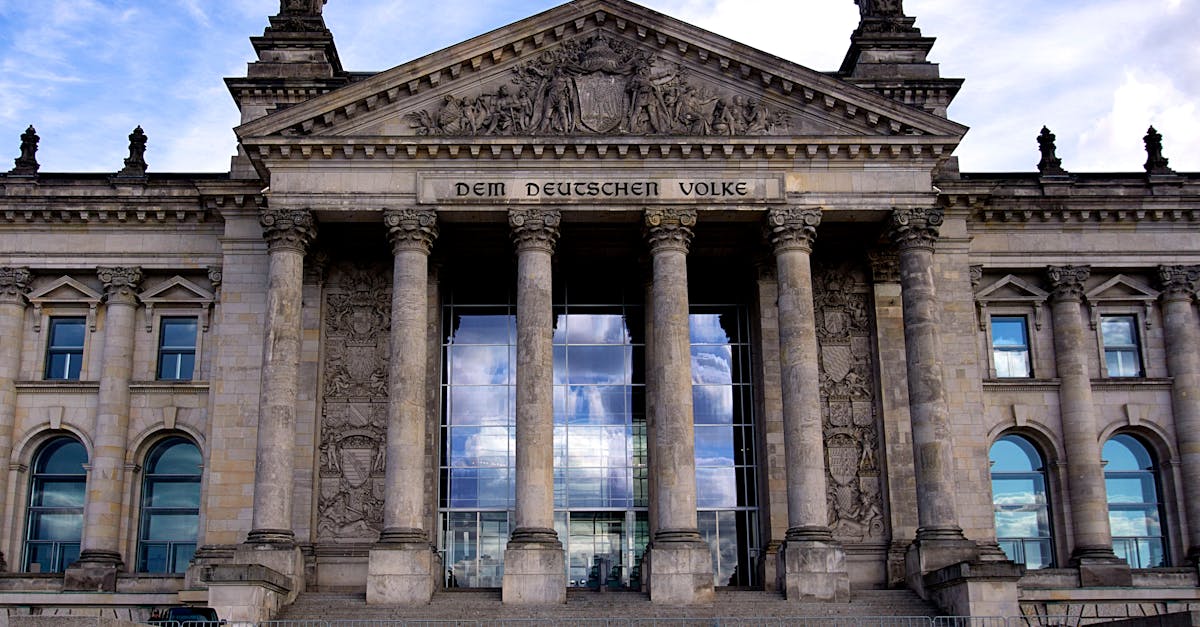
6 Democracy Myths Shattering Political General Knowledge
— 5 min read

Six common myths about democracy mislead most citizens, shaping a simplified picture of how power flows in the United States. In my reporting I have seen these myths clash with the messy reality of courts, agencies, and civic activism, revealing gaps that basic civics never mention.
"The idea that democracy is just three branches, checks and balances, and majority rule is a comforting myth that rarely survives scrutiny."
Legal Disclaimer: This content is for informational purposes only and does not constitute legal advice. Consult a qualified attorney for legal matters.
Your Guide To Politics General Knowledge Questions On Power
I often hear newcomers say democracy means the 51% gets to decide everything. That "51% tyranny" notion ignores the constitutional safeguards built to protect minority rights. The Bill of Rights, for example, limits what a simple majority can do, ensuring that certain freedoms - speech, religion, due process - cannot be overridden by a fleeting vote.
When I covered a state attorney general challenging their own secretary of state over ballot-access rules, the conflict illustrated how the branches are intentionally designed to clash. The legal fight created a friction point that forced the courts to step in, showing that checks and balances are not just abstract ideas but active, sometimes adversarial, mechanisms that preserve stability.
Another myth I encounter is that "government by the people" means citizens vote on every issue. In practice, most democracies operate as representative systems: elected officials deliberate, draft, and implement policy on our behalf. Direct referendums are rare and usually limited to specific constitutional amendments or budget questions, far from the everyday governance most people imagine.
These misconceptions matter because they shape expectations. When citizens expect immediate, majority-driven outcomes, they become disillusioned when courts block popular measures or when legislators compromise. Understanding that democracy blends popular input with institutional restraints helps set realistic expectations for civic participation.
Key Takeaways
- Minority rights limit pure majority rule.
- Checks and balances thrive on intentional conflict.
- Representative democracy, not direct rule, is the norm.
- Misunderstanding myths fuels civic frustration.
- Real-world examples expose textbook gaps.
How Democracy Works Basic Architecture And Modern Stress Tests
In my experience, the simplest description of how democracy works is that the governed give consent through free, fair elections. Yet recent controversies, such as the heated confirmation hearings for a surgeon-general nominee, reveal how political pressure can strain institutions that are meant to operate apolitically.
The bureaucracy’s neutrality is a cornerstone of democratic stability. When an incoming attorney general seized unilateral control over massive settlement funds, the move sparked a legal battle that tested the limits of executive power versus statutory safeguards. This clash highlighted how institutional design meets real-world ambition, and why a neutral civil service matters.
Judicial review acts as a circuit breaker in this system. A recent state Supreme Court decision transferred settlement authority from the attorney general to a newly created independent commission, rebalancing power and demonstrating that courts can intervene to preserve the equilibrium envisioned by the framers.
These stress tests show that democracy is not a static diagram but a living network of interactions. Each branch - legislative, executive, judicial - relies on the others to check excesses, and when one branch pushes too far, the others respond, often through protracted legal or political battles that ordinary civics textbooks skip.
The Three Silent Failures In Common General Politics Frameworks
One failure I see in civic education is the omission of non-electoral participation. Legal challenges by minor parties, public pressure on corporations, and grassroots advocacy - all shape policy without a ballot. For instance, General Mills recently removed synthetic dyes after sustained consumer activism, an outcome driven by market pressure rather than legislation.
Another blind spot is the assumption that political systems are static. Federalism creates fifty simultaneous experiments in democracy, where state attorneys general can pursue agendas that directly oppose federal policy or even clash with their own state officials. These divergent approaches illustrate how adaptable, and sometimes contradictory, democratic practice can be.
Finally, many guides overlook the "when" of democracy. Systems are most vulnerable during transitions of power, nominations, and budget cycles - not just on Election Day. The scramble to confirm a cabinet nominee or the negotiation of a federal budget reveals hidden vulnerabilities that ordinary voters rarely see.
By ignoring these silent failures, educators leave citizens ill-prepared to recognize the full range of political influence that exists beyond the ballot box.
Civic Education Blind Spots On Comparing Political Systems
When I compare the U.S. presidential system to parliamentary models, a glaring blind spot emerges: visibility. In a presidential system, the president and appointed officials like the surgeon-general become lightning rods for public scrutiny, concentrating accountability in a single figure. Parliamentary systems diffuse responsibility across parties and cabinets, making it harder to pin blame on a single individual.
Effective comparison also requires looking at outcomes, not just structures. Different democracies handle public health, market ethics, and election access in varied ways. For example, some parliamentary nations have a single health minister who can swiftly enact nationwide policies, while in the United States, multiple agencies and a fragmented appointment process can delay action.
A third blind spot is teaching democracy in isolation. By contrasting democratic institutions with authoritarian or hybrid regimes, students can see why features like an independent attorney general are fragile exceptions rather than global norms. In many authoritarian states, the equivalent office is directly controlled by the ruling party, eliminating the very checks that protect democratic accountability.
Understanding these comparative nuances helps learners appreciate both the strengths and vulnerabilities of our own system, and why constant vigilance is required to maintain democratic health.
Rebuilding Your Foundation On Practical Political General Knowledge
My reporting habit is to move beyond memorizing the three branches and instead dissect how they interact in current events. Take the recent legislative grilling of an executive nominee: the hearing revealed not only partisan disagreement but also procedural norms, Senate rules, and the nominee’s past actions - all of which shape the final outcome.
To ground political knowledge, I rely on primary sources - state constitutions, court opinions, and official statements from figures like Attorney General Todd Blanche. These documents reveal the raw mechanics of governance, free from the spin that secondary summaries often introduce.
Connecting formal structures to informal power is equally essential. Tracking how corporate decisions, media narratives, and legal advocacy influence policy shows that politics operates in the space between official institutions and public pressure. For example, a corporate decision to change product labeling can trigger regulatory reviews, legislative hearings, and consumer activism - all feeding back into the democratic process.
By integrating these layers - formal rules, real-time events, and outside influences - readers can rebuild a more accurate, resilient foundation for understanding politics in practice, rather than relying on oversimplified textbook diagrams.
Frequently Asked Questions
Q: Why does the myth of pure majority rule persist in civic education?
A: The myth persists because it simplifies a complex system into an easy-to-remember narrative, making it appealing for introductory lessons. It also aligns with the romantic notion of popular sovereignty, even though constitutional safeguards limit unchecked majority power.
Q: How do checks and balances create intentional conflict?
A: Each branch is given powers that can limit the others, such as veto rights, judicial review, and legislative oversight. This design forces branches to negotiate and sometimes clash, preventing any single entity from accumulating unchecked authority.
Q: What role does non-electoral participation play in democracy?
A: Non-electoral actions - like legal challenges, advocacy campaigns, and consumer pressure - shape policy outcomes without a vote. They complement formal elections by influencing legislators, regulators, and corporate behavior, expanding the avenues for democratic engagement.
Q: How does federalism create multiple experiments in democracy?
A: Because each state has its own constitution, courts, and elected officials, policies can differ dramatically across the country. This diversity lets states test varied approaches - like differing voting rules or settlement authority - providing a laboratory for democratic innovation.
Q: Why compare democratic systems with authoritarian regimes?
A: Comparison highlights which democratic features are fragile and which are essential. By seeing how authoritarian systems concentrate power, learners can better appreciate the importance of independent institutions - like an autonomous attorney general - in preserving democratic checks.